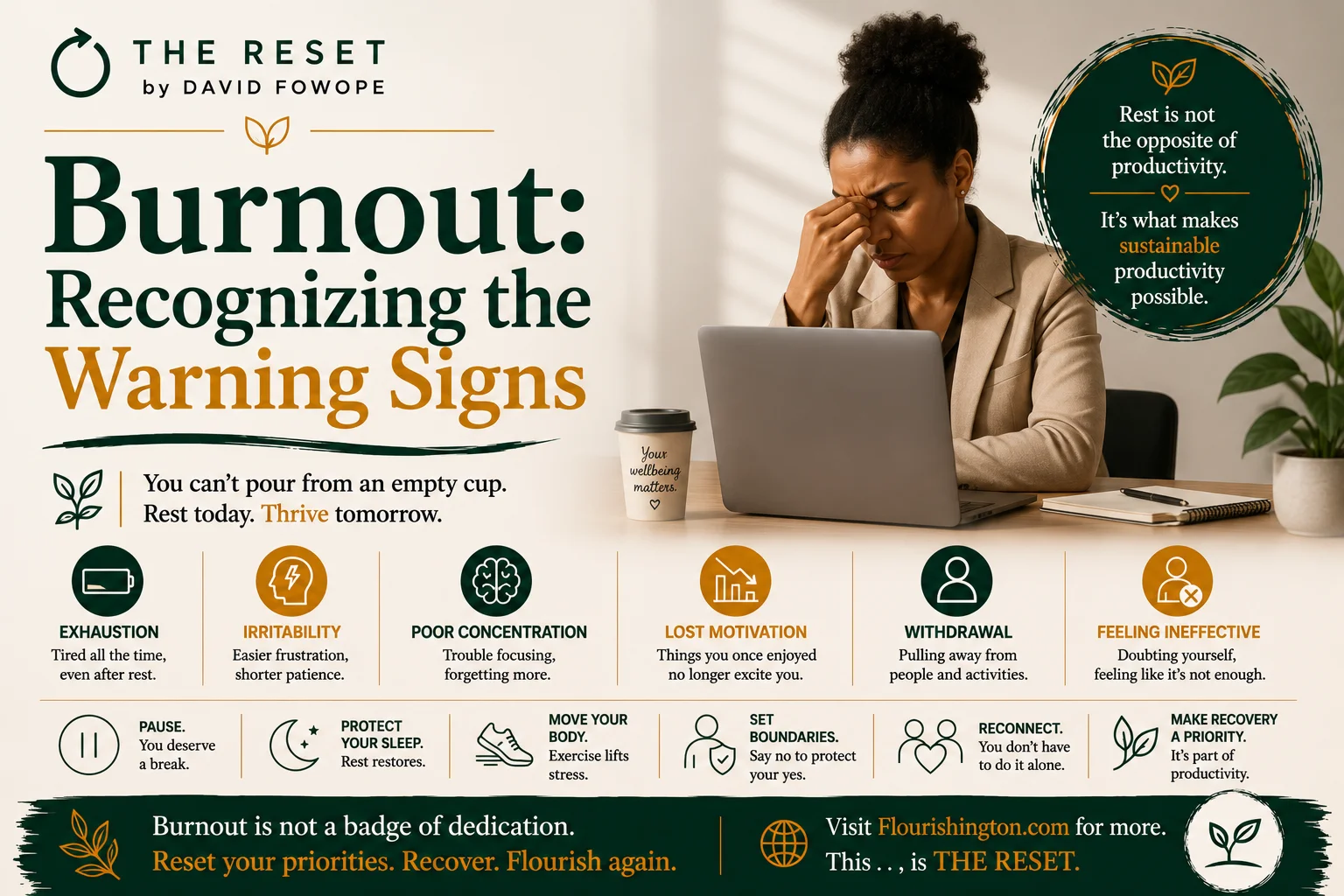

You keep pushing, smiling, answering messages, meeting deadlines, and showing up for everyone—but inside, your energy is disappearing. Could your body already be warning you?
Burnout rarely announces itself dramatically. It often develops gradually, hidden beneath productivity, responsibility, and the belief that you simply need to “push a little harder.”
But when prolonged stress consistently exceeds your opportunities for recovery, your mind and body eventually begin showing the cost.
When Stress Becomes Burnout
Stress and burnout are related, but they are not identical. Short-term stress can motivate you to respond to challenges. Burnout is commonly associated with chronic workplace stress that has not been successfully managed, particularly exhaustion, growing mental distance or cynicism toward work, and reduced professional effectiveness.
You may still be functioning outwardly while internally feeling increasingly depleted.
You wake up tired despite sleeping. Tasks that once felt manageable become overwhelming. Motivation disappears. Small frustrations provoke disproportionate irritation.
Eventually, you may wonder:
“What happened to me?”
Sometimes the better question is:
“How long have I been functioning without adequately recovering?”
Your Brain Under Chronic Stress
When demands continue, your brain and body repeatedly activate stress-response systems involving the amygdala, hypothalamus, autonomic nervous system, and hormonal pathways.
Cortisol and other stress-related chemicals help mobilize energy during challenges. But prolonged stress without sufficient recovery can interfere with sleep, concentration, emotional regulation, motivation, and cognitive performance.
Your attention may become scattered. Decision-making can feel harder. You may become emotionally reactive—or emotionally numb.
This is why burnout cannot always be solved by simply “trying harder.”
The system responsible for trying harder may itself be exhausted.
Recognize the Warning Signs
Burnout can look different from person to person, but warning signs may include persistent exhaustion, irritability, poor concentration, declining motivation, cynicism, withdrawal from others, reduced effectiveness, and difficulty emotionally disconnecting from work.
You might procrastinate on tasks you previously handled easily.
You may begin dreading work before the day starts.
Perhaps you stop enjoying activities that once helped you recharge because you feel too tired to participate.
Recognizing these changes early matters.
Ignoring them while increasing your workload may deepen the cycle.
Make Recovery Part of Productivity
If your phone battery reached 5%, you probably wouldn’t criticize it for needing power.
Yet people frequently expect their minds and bodies to function indefinitely without restoration.
Start by protecting your sleep. Take meaningful breaks rather than scrolling through work-related messages during “time off.” Move your body regularly. Spend time outdoors. Reconnect with people who help you feel grounded.
Then examine the demands themselves.
What can be reduced?
What can be delegated?
Where is a boundary needed?
What genuinely requires your attention—and what have you simply become accustomed to carrying?
Recovery is not only relaxation. Sometimes recovery requires changing the conditions repeatedly creating exhaustion.
Reset the Internal Message
Burnout often grows alongside rigid beliefs:
“I must keep pushing.”
Reset it:
“Rest helps me function better. Protecting my wellbeing is responsible, not weak.”
Replace:
“If I slow down, I’m failing.”
With:
“Slowing down strategically may help me continue sustainably.”
Cognitive restructuring does not remove responsibilities. It challenges the belief that exhaustion is proof of commitment.
Know When to Seek Help
Burnout can overlap with depression, anxiety, sleep disorders, medical conditions, and other mental health concerns. If exhaustion, hopelessness, loss of interest, significant sleep disturbance, or difficulty functioning persists, professional assessment may be appropriate.
Don’t automatically label every symptom “burnout” and overlook something requiring treatment.
Your body and mind are not machines designed for endless output.
Burnout is not a badge of dedication. Recognize the warning signs. Reset your priorities. Recover intentionally—and give yourself room to flourish again.
Rest is not the opposite of productivity. Sometimes, it is what makes sustainable productivity possible.
This . . ., is THE RESET.
Written by David Fowope, MFA, PMHNP-BC.